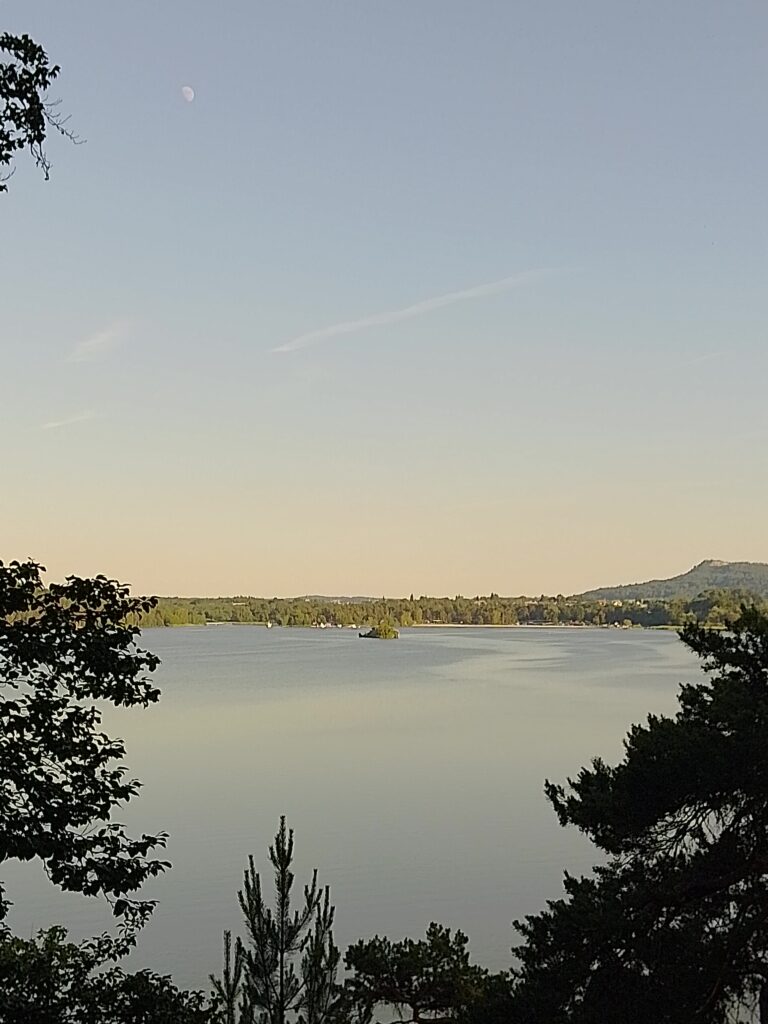
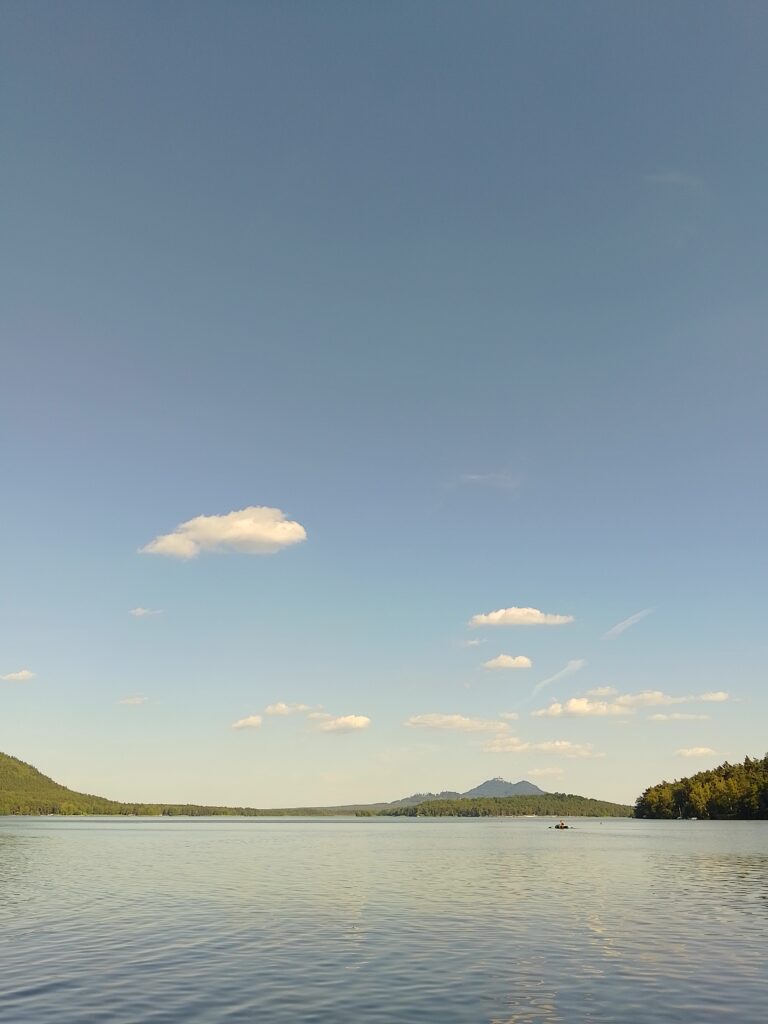
Staré Splavy. A swim and a walk, totalling around five kilometres. This time, the focus is not on the romantic poet Karel Hynek Mácha, after whom the Hirschberg Great Pond is named ‘Máchovo jezero’ in Czech, or ‘Mácháč’ for short. An official walking trail commemorates him. Instead, the focus is on the Hollywood director Miloš Forman (‘The Firemen’s Ball’, ‘One Flew Over the Cuckoo’s Nest’, ‘Amadeus’), his unusual family history and the fate of his parents during the German occupation.
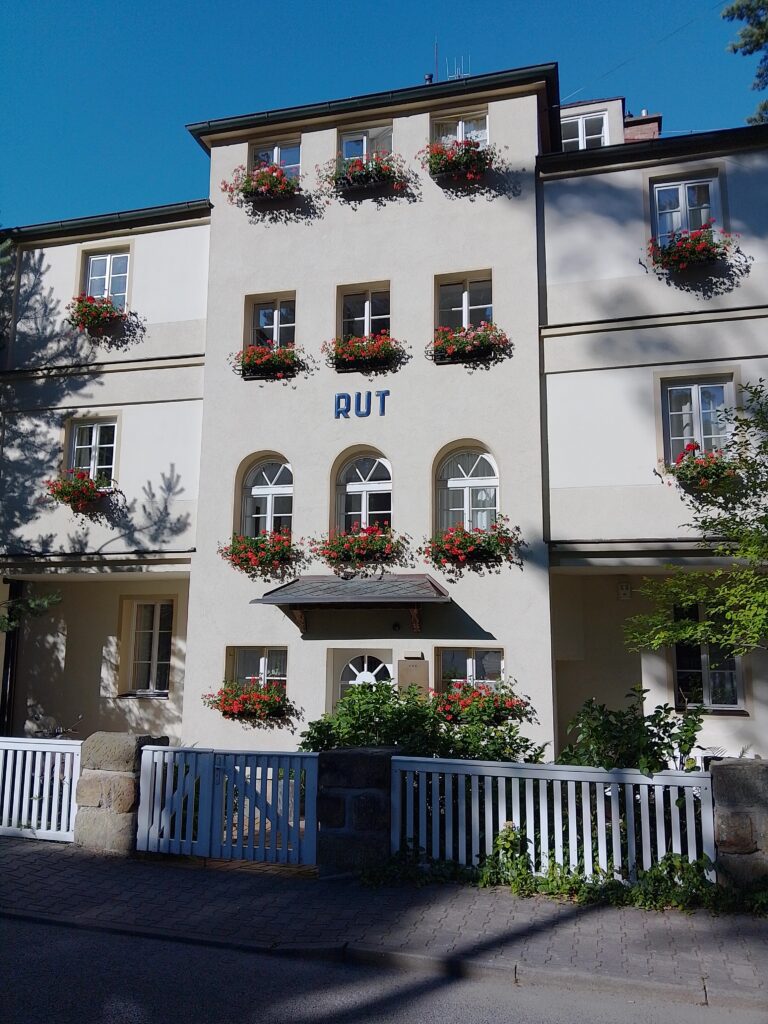
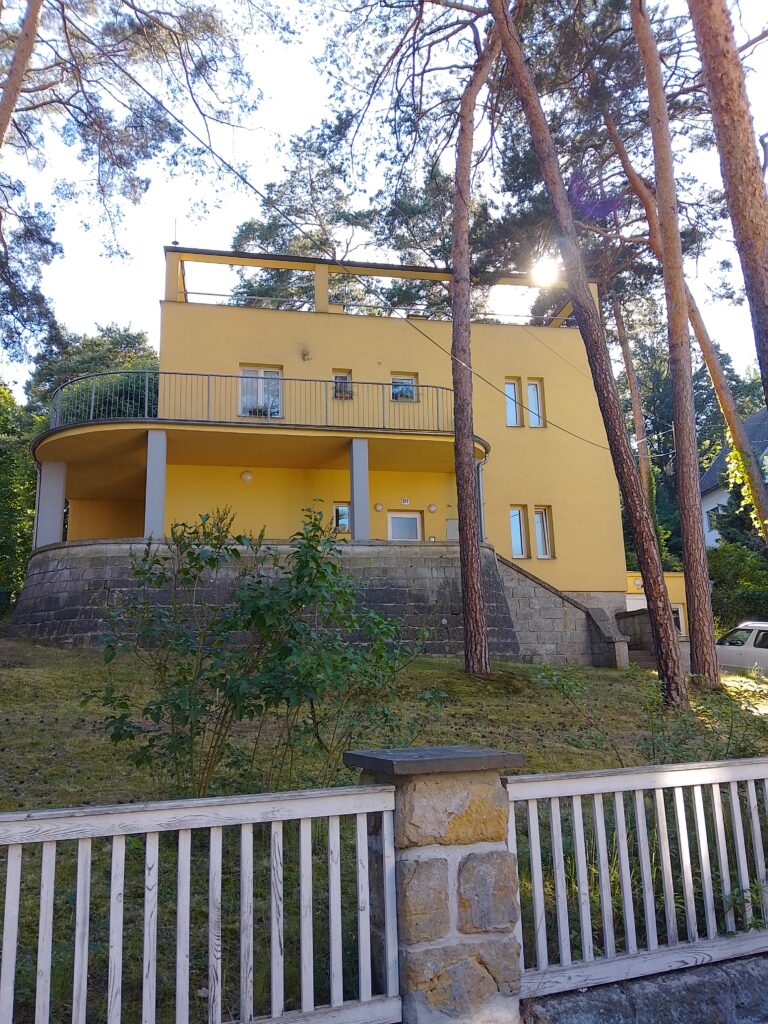
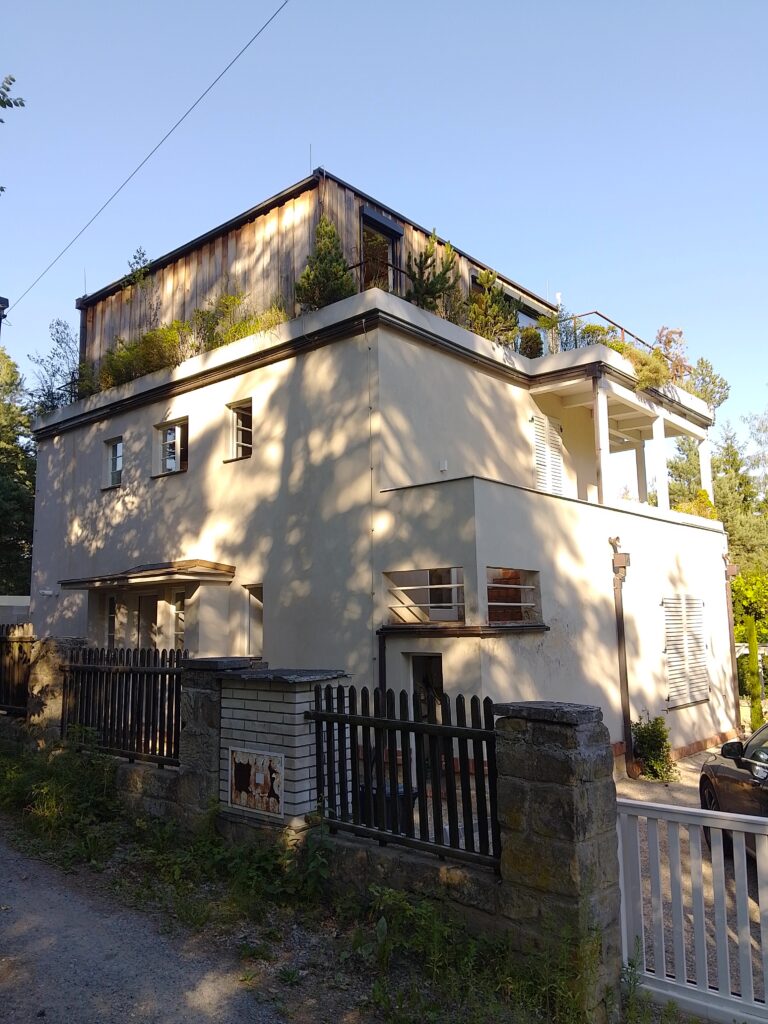
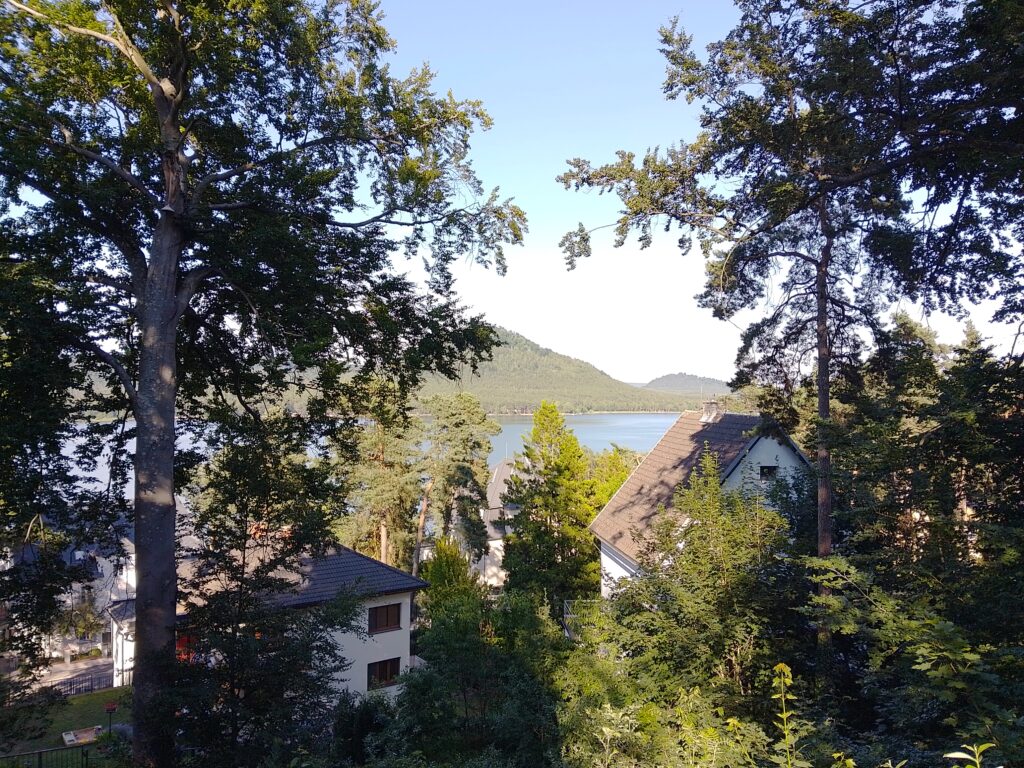
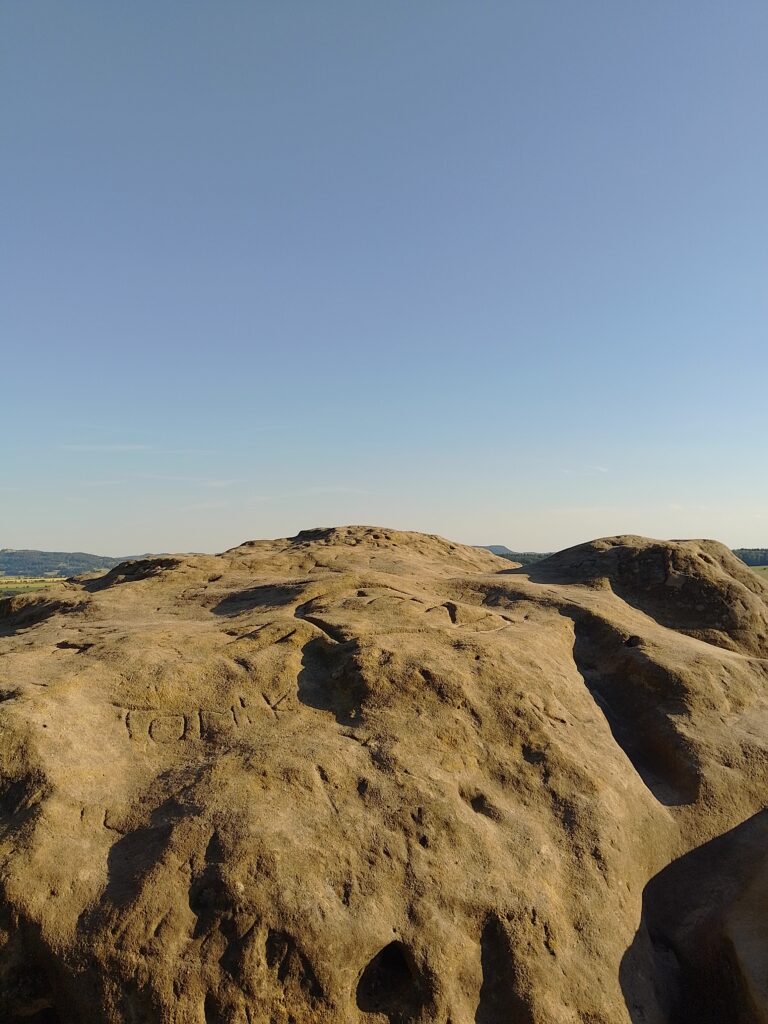
The short walk leads from the lakeside promenade at the dam up a flight of steps to Lázeňský vrch and past the Rut guesthouse and the Dela and Kohn villas to the Miloš Forman viewpoint. If you like, you can continue the walk through a small pine forest to the Staré Splavy beach (100 Kč in summer, free in the evenings) and along the lakeside path below the villas. Back at the dam, a blue-marked route leads up to Hávrany skála, offering views over Staré Splavy, the lake and the surrounding pine forests. Another spot for swimming is the lakeside area by the dam (Pláž u hráze, free of charge).
A Family Idyll by the Lake
In the 19th century, Staré Splavy (Thammühl am See) and the neighbouring, larger town of Doksy (Hirschberg am See) developed into a Bohemian seaside resort. Holidaymakers from the Austro-Hungarian Empire, and later from the newly formed Czechoslovakia, spent their weekends and summer holidays at the reservoir, which dates back to the late Middle Ages (14th century). Forman’s parents, Anna and Rudolf Forman, began building the Rut summer hotel on Lázeňský vrch in 1927. During renovation work in the summer of 1931, his mother met Otto Kohn, one of the two neighbours and architects of the Dela and Kohn villas opposite. Miloš Forman was born in February 1932; it was not until the early 1960s that he learnt who his biological father was.
“Every May, my mother left the men of the familyto their own wits in Čáslav and made the three-train, six-hour journey to Mácha’s Lake. She unlocked the building, chased out the mice that had snuck in over the winter, swept out the cobwebs, brushed the dead flies off the windowsills, unpacked the stores sheets and plates, had the rooms repainted, hired a paststry chef. When school year ended at the beginning of July, my father and the boys joined her. They cooked for the guests, sold sweets to the walk-in customers, did all the repairs around the property, hiked in the woods, swam and fished in the lake. They had wonderful summers, and they made money, too.”
A Turning Point: The German Occupation
With the Munich Dictate and the annexation of the Sudetenland by Nazi Germany in 1938, the idyll came to an end. Staré Splavy, which was predominantly German-speaking at the time, was annexed by the German Reich, and the hotel was confiscated. Rudolf Forman, a teacher and reservist, had joined a resistance group. In the spring of 1940, he was arrested by the Gestapo at the school in the family’s home town of Čáslav, in full view of his son. Anna Formanová was arrested by the Germans in August 1942 during a search of the family home. Forman saw his mother for the last time during a prison visit to the Gestapo headquarters in Prague in the autumn of 1942. She died on 1 March 1943 in the Auschwitz concentration camp at the age of 49; according to the death register of the Mittelbau-Dora concentration camp, Rudolf Forman died on 10 May 1944 at the age of 54.
After the end of the war, Miloš Forman and his two older brothers were given back the summer hotel. Following its expropriation by the Communists in 1948, Miloš Forman – who had attended a boarding school in Poděbrady alongside Václav Havel, amongst others – was allowed to keep one room (No. 16) until he came of age. The building became a trade union holiday home – Forman recounts stories of participants in a crash course on ‘Modelling under Socialism’ and a romance that never came to fruition – until the family regained possession of it in 1991 following the Velvet Revolution. To this day, the Pension Rut is run by relatives of Miloš Forman.
According to the Czech Wikipedia, Forman’s biological father, Otto Kohn, fled to France in 1938 with more than 20 other members of the Kohn family and later emigrated to Ecuador. The family of Otto Kohn’s mother (Miloš Forman’s biological grandmother) remained in Prague during the war and were murdered by the Germans in concentration camps. Otto Kohn moved to the USA with his family in 1945. Miloš Forman learnt from a letter written by a former fellow prisoner of his mother that the architect was his father. The two men never established a close or lasting relationship.
Miloš Forman dedicated his memoir “Turnaround” to his parents – “all of them”, as he put it.
MAP ON MAPY.CZ
* The link takes you by default to the vyhlídka Miloše Formana (Miloš Forman Viewpoint) – please zoom out for an overview of the surrounding area.
REFERENCES AND TIPS
* Miloš Forman/Jan Novak: „Turnaround – A Memoir“. Villard Books, New York 1994.
* Article on the history of Pension Rut on the guesthouse’s own website
* Entry on Otto Kohn in the Czech Wikipedia – including a list of the architect’s buildings
FILM LINK
Miloš Forman’s “The Firemen’s Ball” (Hoří, má panenko, 1967) – Available on YouTube with subtitles; unfortunately not available online, but well worth watching: “Loves of a Blonde” (Lásky jedné plavovlásky, 1965) starring Hana Brejchová, about the lifestyle of young people in what was then Czechoslovakia.
FOOD/DRINK/PARKING
* Kiosek U přístaviště (Kiosk at the jetty) – a wooden building in the functionalist style (c. 1929), various cafés and restaurants
* Minimarket, Jarmilina stezka 214, Staré Splavy; supermarkets in Doksy
* Parkoviště pod hrází/Car park by the dam (30 Kč per hour)
NEARBY TOUR
* You can read an article about Karel Hynek Mácha, his poem “Máj” and a section of the Mácha Trail (from the lake to Bezděz Castle) here on Poetenwege.com.
(As of July 2026, translated from German using the free version of Deepl.com)