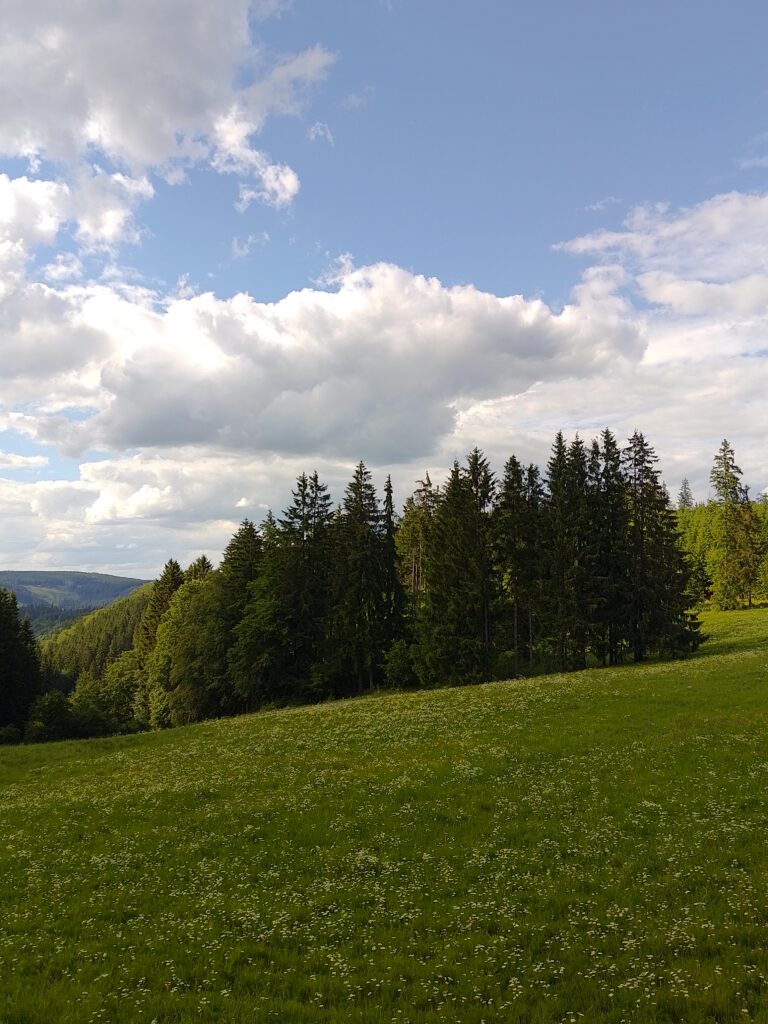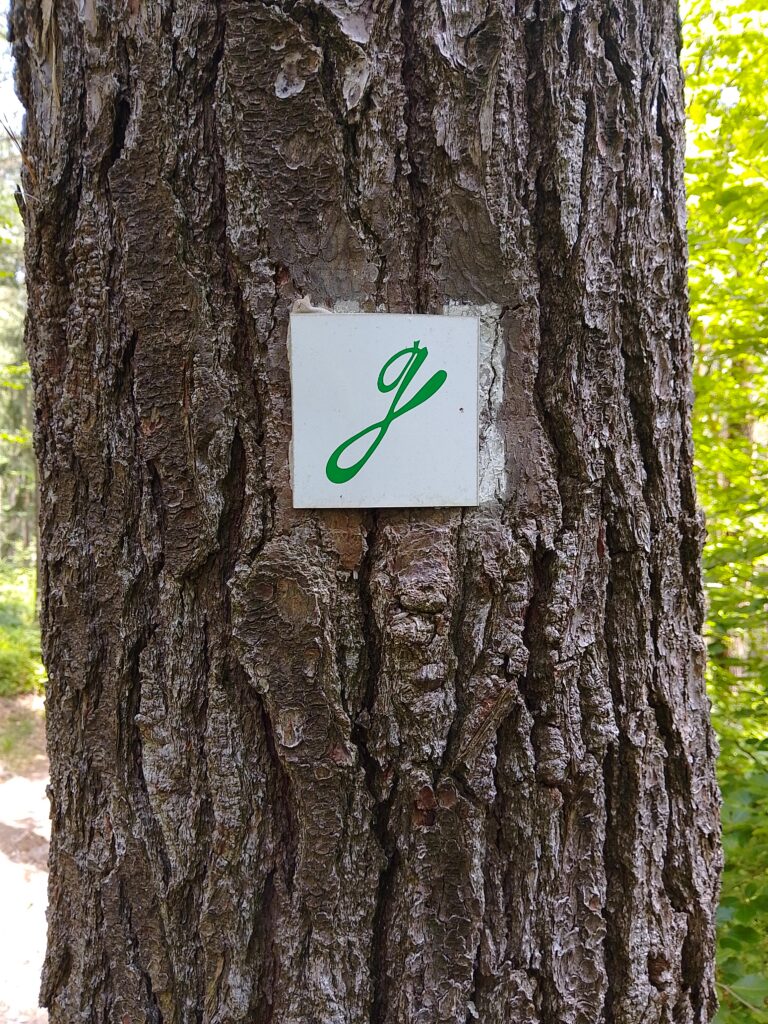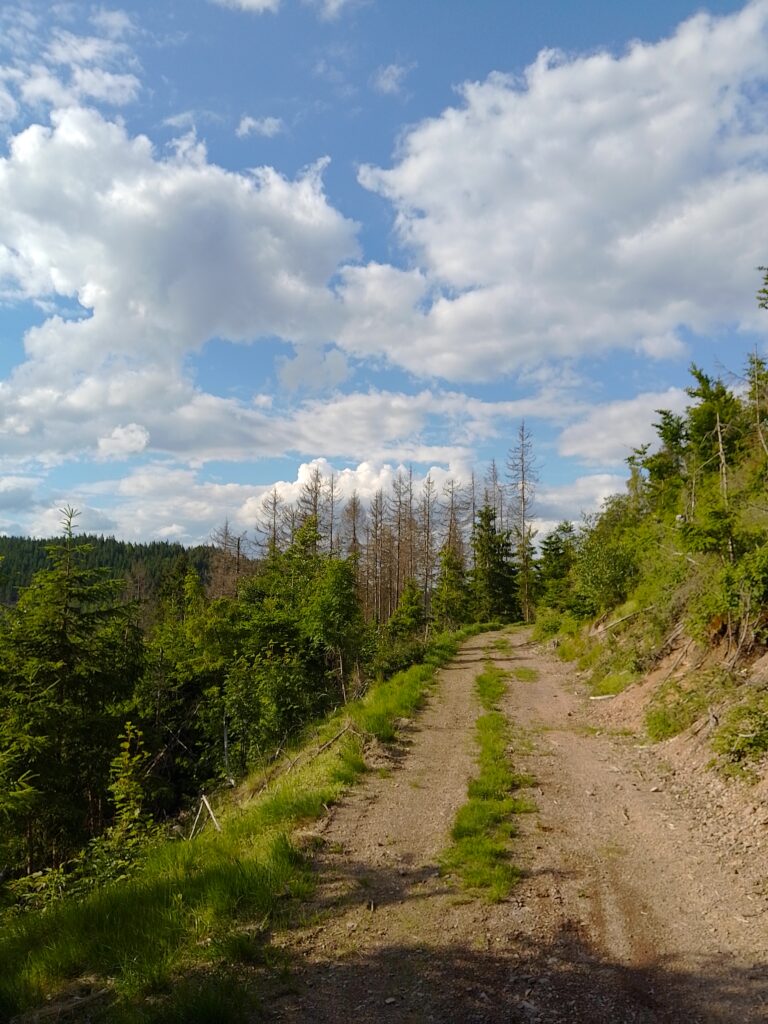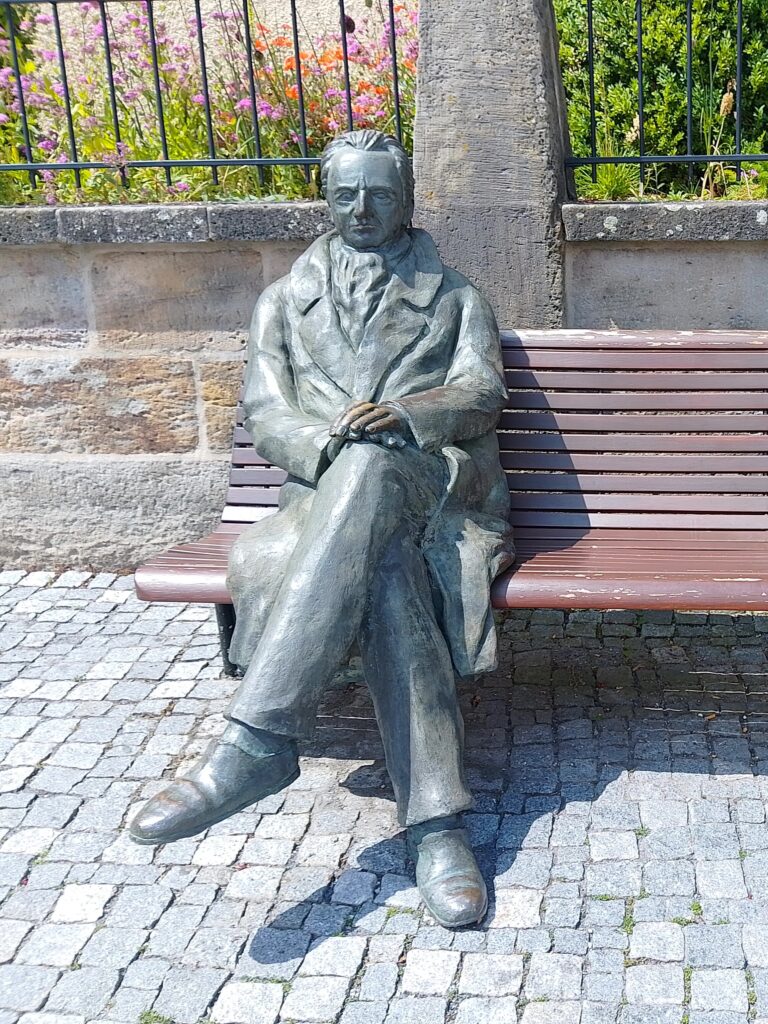
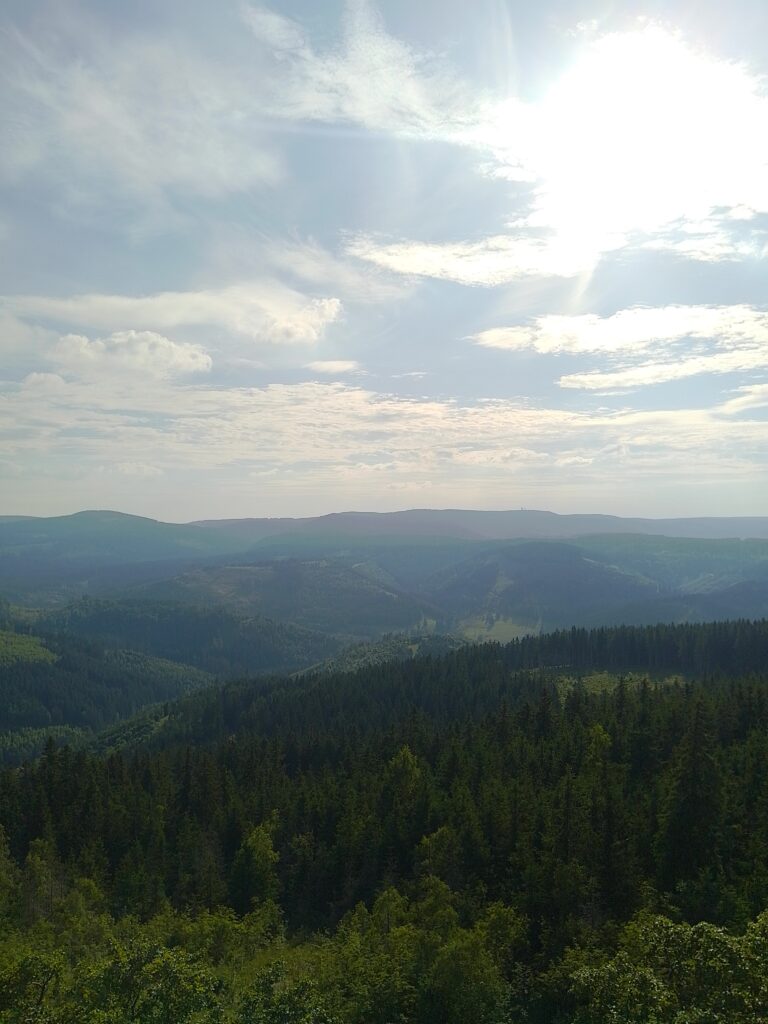
Ilmenau in Thuringia, the Goethe Walking Trail, which is around 20 kilometres long. A classic amongst poets’ trails thanks to its natural beauty, the multitude of documented locations and a true global hit (“O’er all the hill-tops/ Is quiet now …”). Goethe visited here 26 times – from his carefree years with the young Duke Carl August right up to his 82nd birthday, ‘Goethes letzte Reise’ (Goethe’s Last Trip – the title of a wonderful book on the subject by the German literary scholar and author Sigrid Damm), which took the poet, accompanied by his two grandsons, back to the town and its surroundings one last time. Forests and valleys, rocks and a cave give a glimpse of why Ilmenau was considered a place of longing for Goethe (even if bark beetles – and subsequently the forestry operations – have recently carved out some rather dystopian swathes through the woodland).
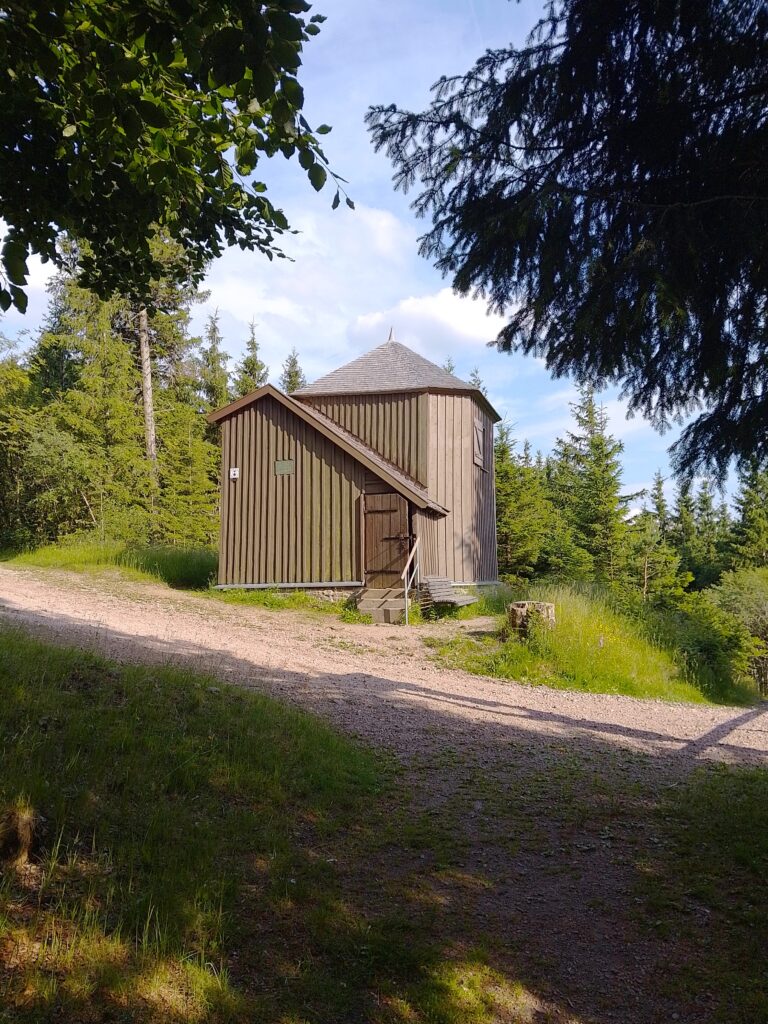
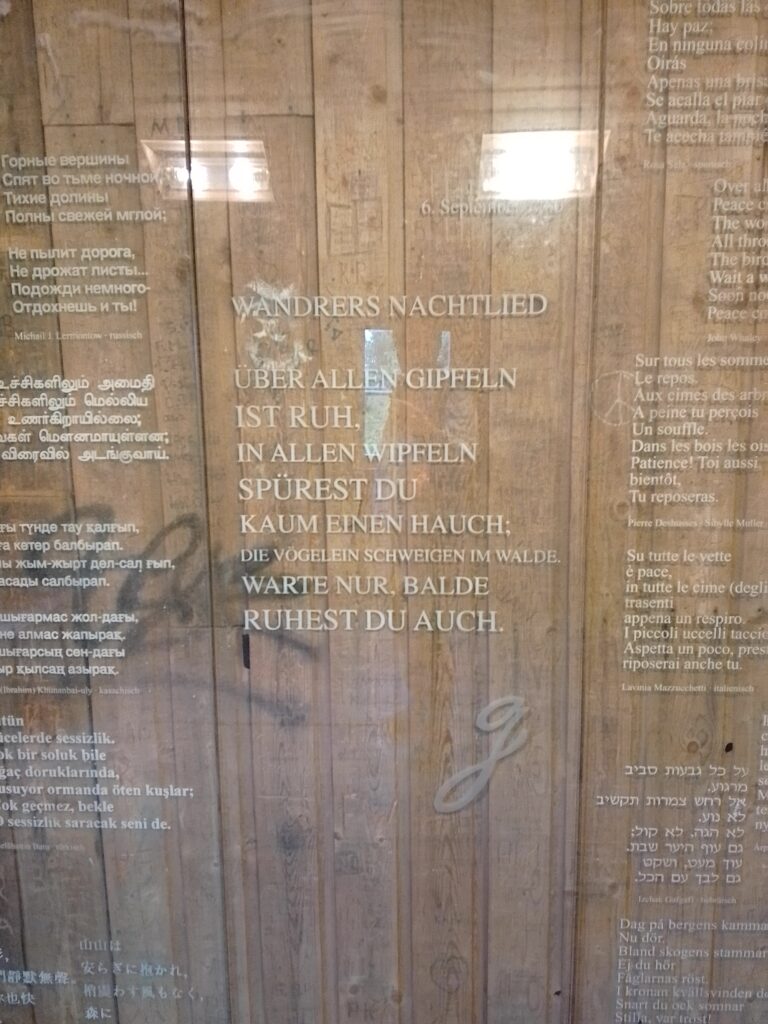
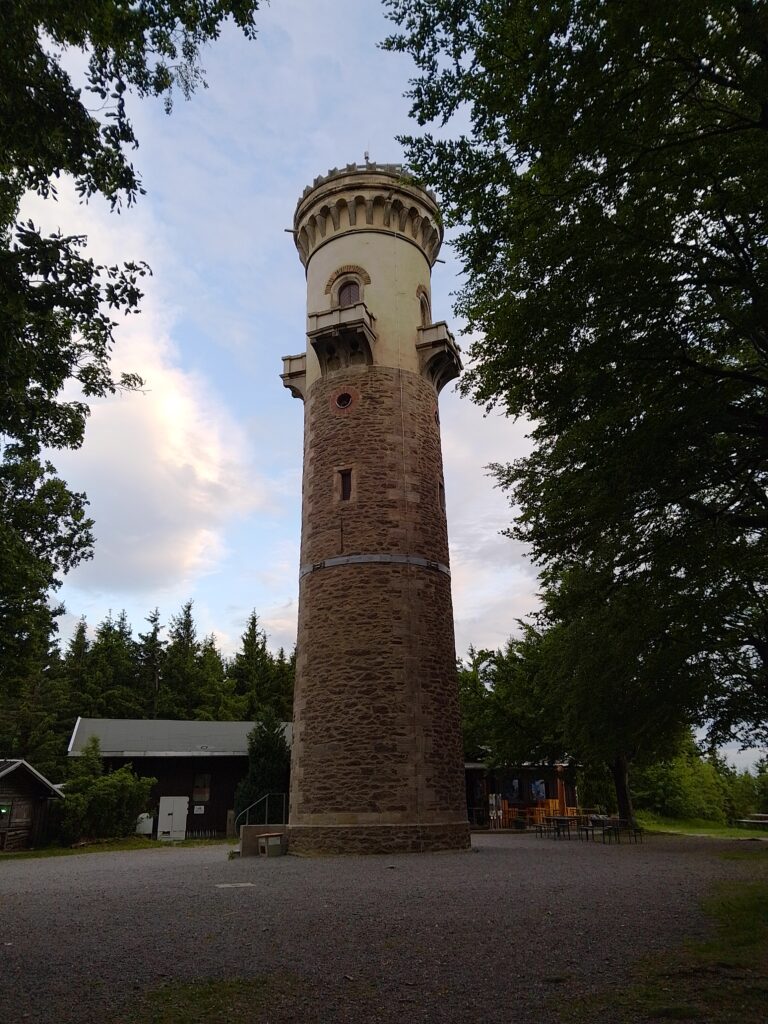
The highlight of the tour is the Goethe Cottage on the Kickelhahn and, alongside it, the nearby Kickelhahn Tower, built in 1855. On 6 September 1780, Goethe had written ‘Wandrers Nachtlied (Ein Gleiches)’ (Wanderer’s Nightsong II) on the wooden wall of a hunting lodge on the mountain.
“Über allen Gipfeln
Ist Ruh‘,
In allen Wipfeln
Spürest Du
Kaum einen Hauch;
Die Vögelein schweigen im Walde.
Warte nur! balde
Ruhest du auch.”
In Henry Wadsworth Longfellow’s translation (1845), the poem reads as follows:
“O’er all the hill-tops
Is quiet now,
In all the tree-tops
Hearest thou
Hardly a breath;
The birds are asleep in the trees:
Wait; soon like these
Thou too shalt rest.”
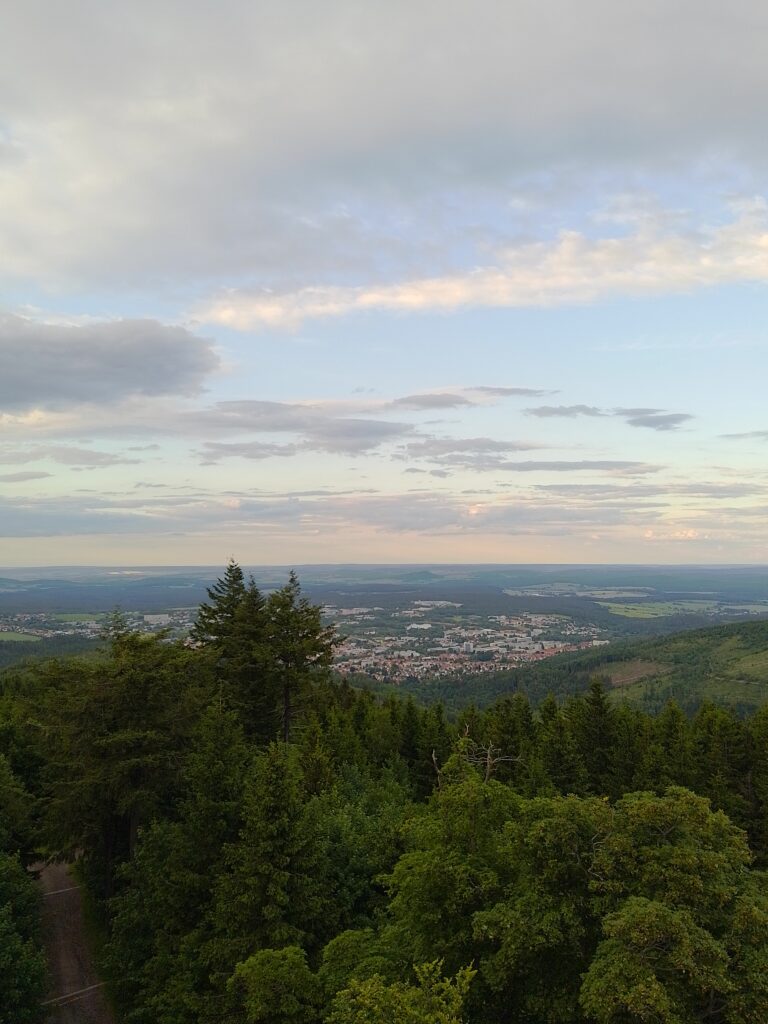
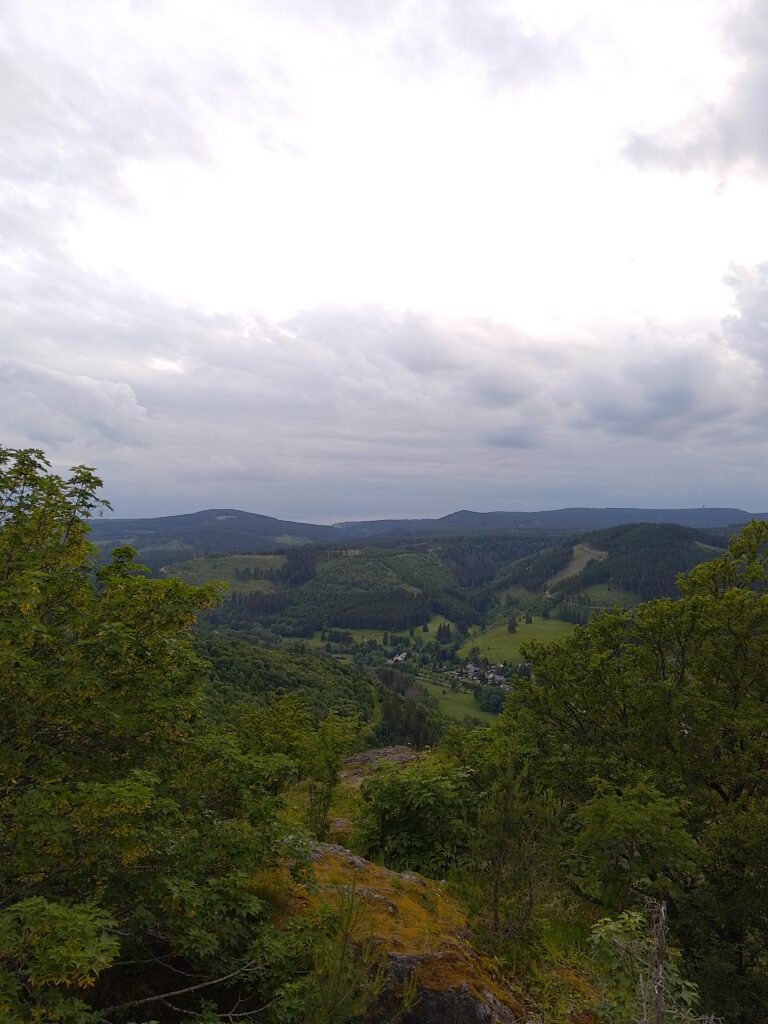
You listen to it in German here. Today, the famous poem can be read in 16 languages at the very same spot, in a replica of the wooden hut that burnt down at the end of the 19th century (and the original can be seen in a photograph). The viewing platform of the Kickelhahn Tower, just a few metres away (free admission), offers a magnificent panoramic view over Ilmenau and the mountains and valleys of the Thuringian Forest.
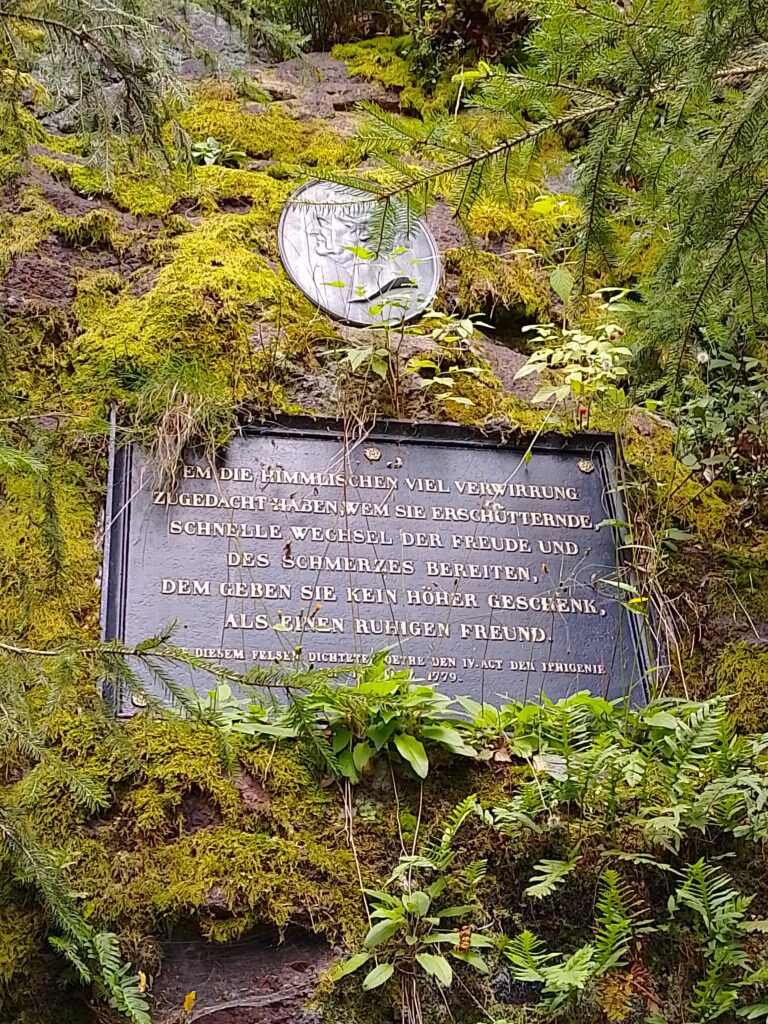
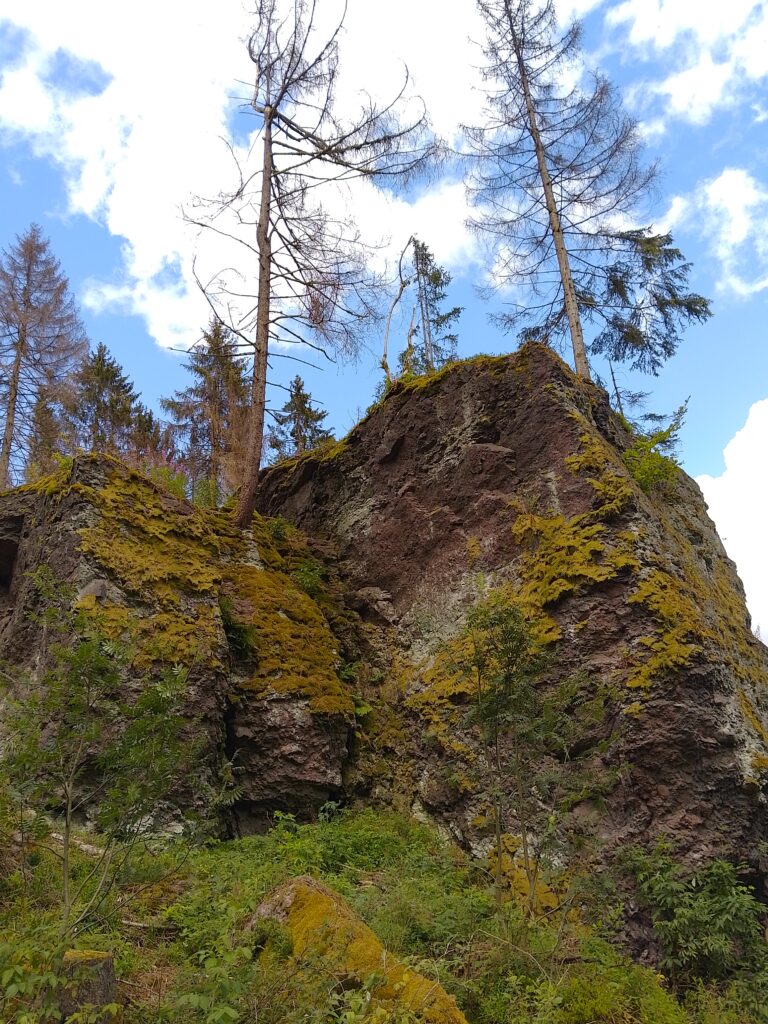
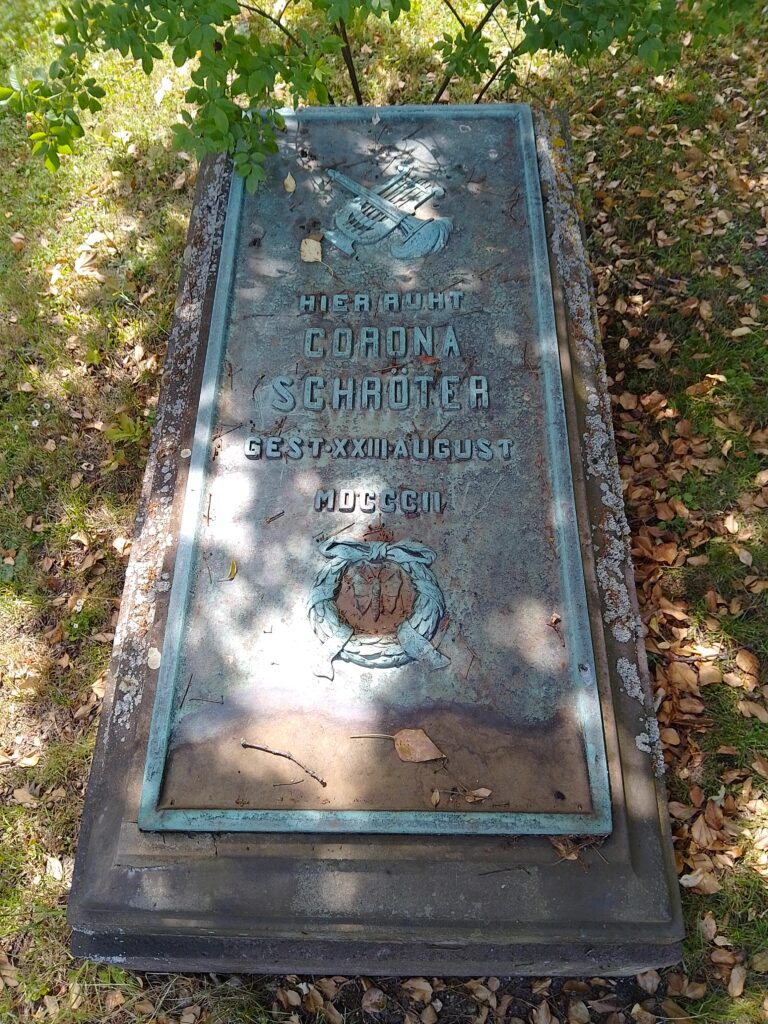
Before and after this, there are a number of other sites associated with Goethe. In the Ilmenau historic Amtshaus (corner room on the first floor on the right, overlooking the market square), Goethe wrote parts of his novel ‘Wilhelm Meister’. Corona Schröter, a friend of Goethe’s and the first actress to play the title role in his drama ‘Iphigenia’, is buried in the cemetery; the poet wrote the fourth act (prose version) of this play on the Schwalbenstein rock. The play in verse form is regarded as an expression of the ideals of Weimar Classicism. The Emmastein rock fascinated the naturalist because of the close connection between lichens, mosses and ferns and the rock itself. The ‘Neuer Johannes’ shaft on the road to Roda and the colliery office bear witness to Goethe’s mining ambitions. Their failure also made Ilmenau a place of defeat for him.
Poetry und a Tête-à-tête
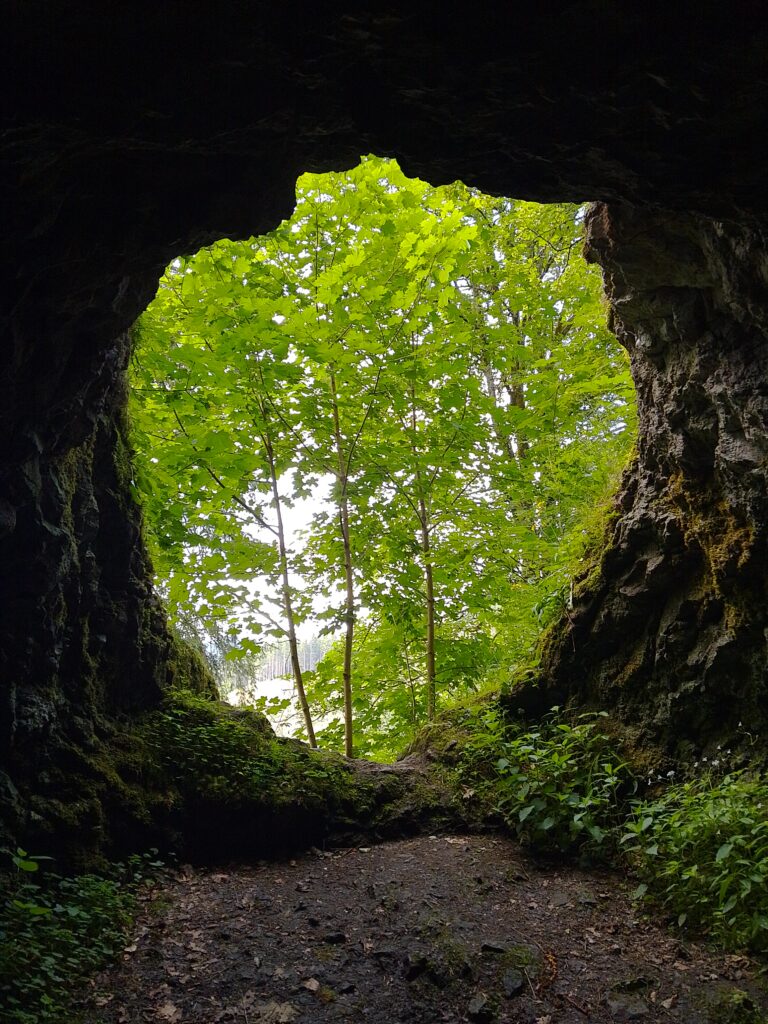
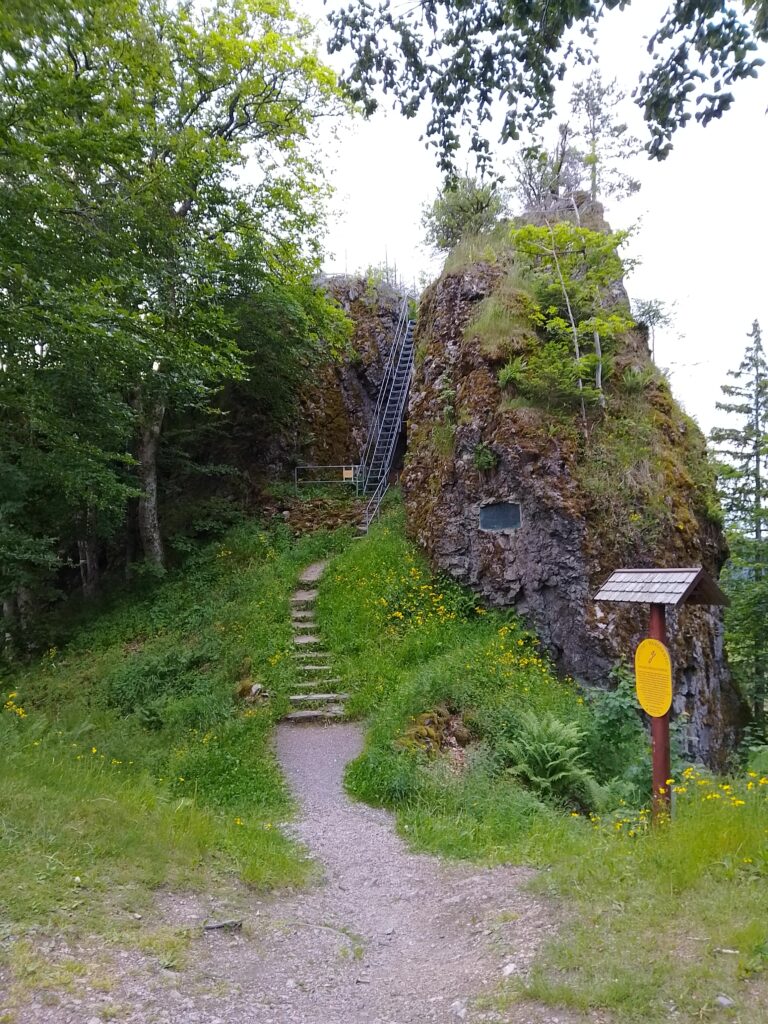
Hermannstein and the Hermannstein Cave, a widened crevice at the foot of the porphyry cliff, became for Goethe a place of poetry and a tête-à-tête. Later, in June 1784, Goethe composed a poem for Mrs von Stein:
„Felsen sollten nicht Felsen und Wüsten Wüsten nicht bleiben,
Drum stieg Amor herab, sieh und es lebte die Welt.
Auch belebt er mir die Höhle mit himmlischem Lichte,
Zwar der Hoffnung nur, doch ward die Hoffnung erfüllt.“
(‘Cliffs should not remain cliffs, nor deserts deserts,
So Cupid descended; behold, the world came to life.
He also enlivens the cave for me with heavenly light,
Admittedly, it was but a hope, yet that hope was fulfilled.’)
The drawing ‘Steaming Valleys near Ilmenau’, sketched on the back of a letter, was also created here. Today, a grating staircase leads up to the rock, from which one can look out over Manebach and Meyersgrund.
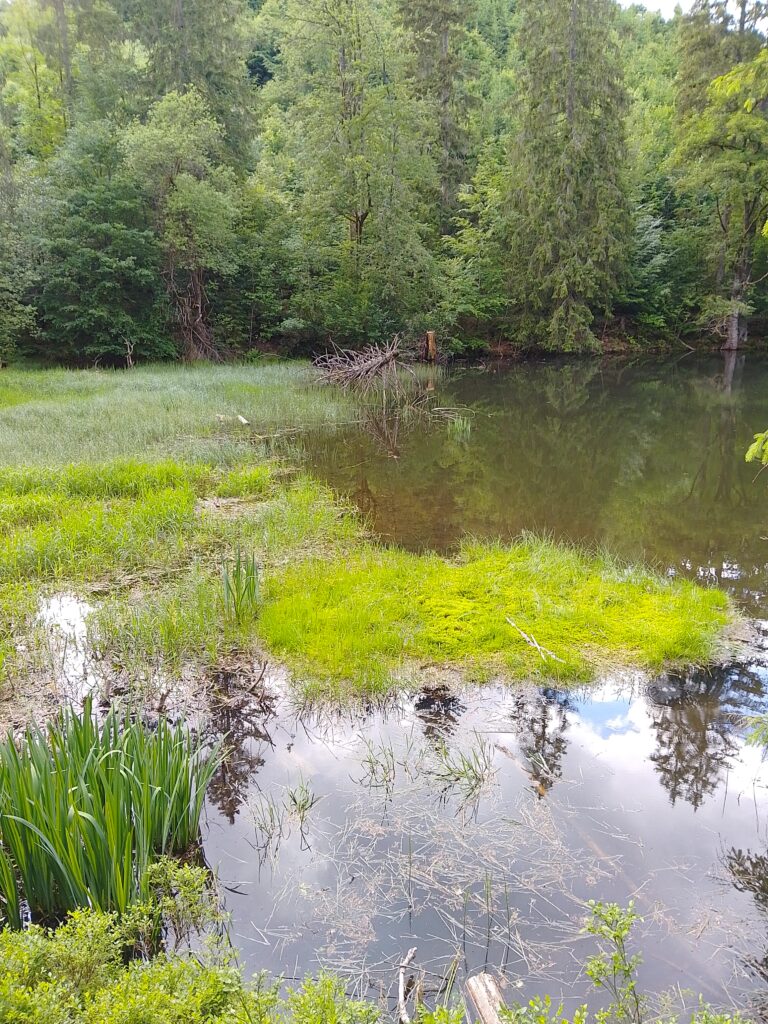
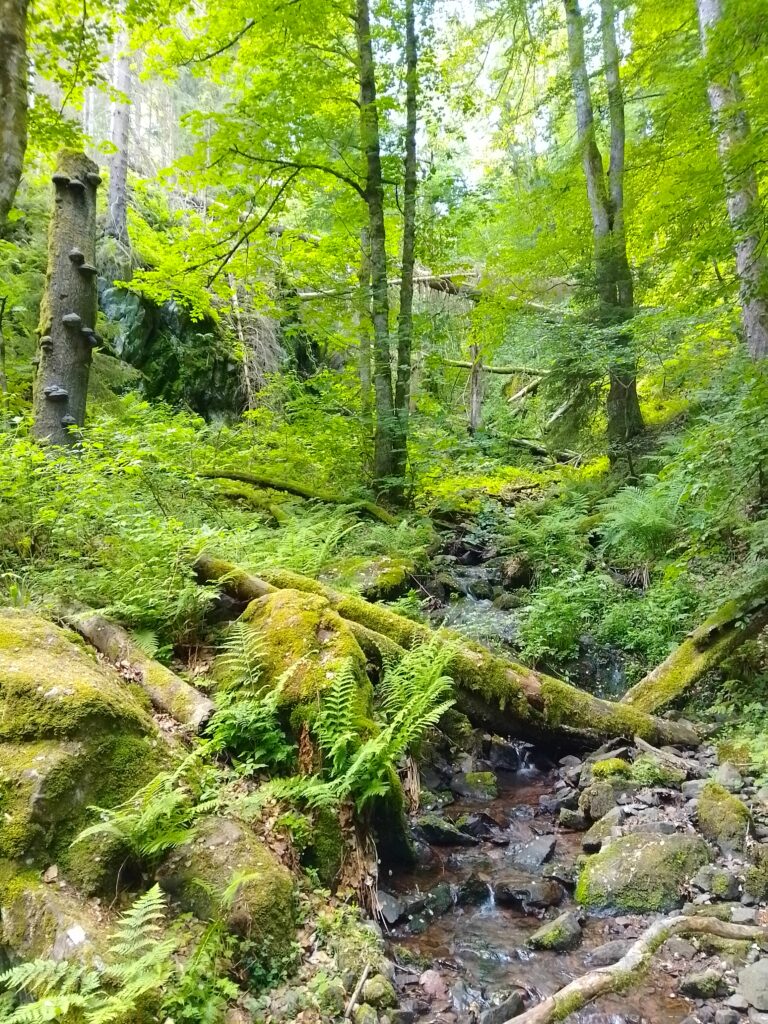
The first section of the Goethe Trail is the more strenuous one; the second is the more scenic. Depending on how much time you have, the route to and from the Kickelhahn can be shortened by taking a direct route from and to Ilmenau, or from and to the Herzogröder Wiesen car park. The official route continues past the Gabelbach hunting lodge, built for royal hunting parties and now a museum. Hirtenwiese, Knöpfelstaler Teich and the end of the Schortetal valley form the (if one may say so, given Goethe’s aversion to German Romanticism) wildly romantic stretch. The Finstere Loch (‘Dark Hole’), a shaded gorge, is impressive with its rock face and a stream over which fallen, moss-covered tree trunks lie.
TOUR ON KOMOOT AND MAP
* You can find the route online at Komoot.com.
* For a printed overview, see the ‘Ilmenau’ walking map published by Grünes Herz Ilmenau, ISBN 978-3-86636-336-6, priced at 4.95 euros.
THE RETURN JOURNEY
* Take the Rennsteig Shuttle train or bus 300 from Stützerbach back to Ilmenau;
partial routes or circular walks are possible from the Herzogröder Wiese car park or Manebach
REFERENCES AND TIPS
* The Goethezeitportal.de website, founded at Ludwig Maximilian University of Munich and run by a registered association, offers an overview of well-organised sources. The Goethe-Gesellschaft Ilmenau-Stützerbach e.V. also brings together material on Goethe’s connection with Ilmenau on its website. (both in German)
* A digital copy of ‘Dampfende Täler bei Ilmenau’ (1776) can be found at the Klassik Stiftung Weimar foundation.
* Sigrid Damm’s book ‘Goethes letzte Reise’ was published in German in 2008 by Insel/Suhrkamp Verlag and is available as a paperback.
* The oil painting ‘Iphigenia in Tauris’ by Georg Melchior Kraus, featuring Corona Schröter as Iphigenia and Goethe as Orestes, can be found here in the database of the Klassik Stiftung Weimar; the entry in the German Wikipedia about the actress, singer and personal friend of Goethe’s, Corona Schröter, which is well worth reading, can be read here.
EXHIBITIONS, CATERING, PLACES TO EAT, SWIMMING
* GoetheStadtMuseum Ilmenau, Jagdhaus Gabelbach Museum, Goethehaus Stützerbach Museum – further information on the City of Ilmenau’s website
* Nahkauf supermarket Ilmenau, Waldgasthof Schöffenhaus inn, Ilm-Markt Manebach, Gasthaus Kickelhahn inn, Gasthaus Auerhahn inn
* The Naturbad Stützerbach (natural swimming pool), Vorderer Rosenkopf 9, is free of charge and has no closing time in the evenings; however, there is no lifeguard on duty – use at your own risk. In winter, the path leading down from the Goethehäuschen towards the Gabelbach Hunting Lodge is a popular toboggan run.
RELATED TOURS
* You can spend a summer’s day with Goethe and Beethoven in Bílina and at Bořeň in Northern Bohemia.
(As at August 2026, translated from German using the free version of Deepl.com)